
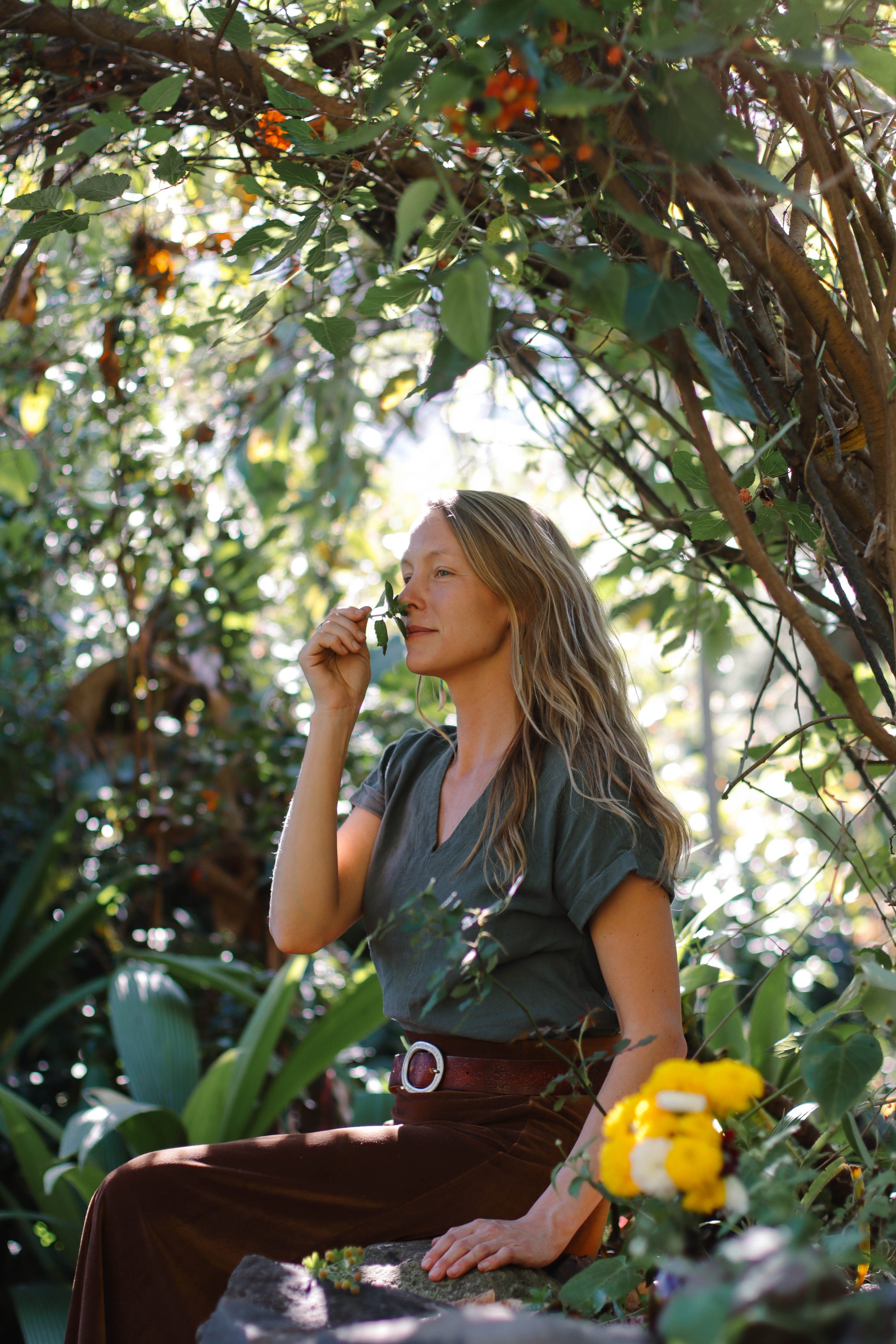
Class Description:
Herbalism as Remembering: Ancestral Ways for Modern Lives
Every lineage on earth worked with plants. In kitchens, in fields, and at the bedsides of the sick and the birthing, plants fed us, healed us, and shaped how we lived together. The knowing may feel far away, and it still lives in our hands, our cravings, and the stories that were carried to us. In this class we will travel across cultures and centuries to see how plants influenced human evolution and daily life, from the first fires and foraged medicines to the tea, food, and tending traditions found in every corner of the world. Then we will bring that long story into a life with phones, deadlines, and traffic, and talk about how to honor the lineages we learn from. Come curious and leave with a first step toward home.
You will take away:
- A timeline of humans and plants, from foraging and fire to fermentation, agriculture, and the first written medicine traditions
- An understanding of how plants shaped the human body, including our digestion, our sense of taste and smell, and our cravings
- The common threads that appear across cultures: tea, bitters, aromatics, and food as medicine, with examples from many traditions
- The roles plants have played in daily life, from nourishment and healing to birth, death, ceremony, and community
- Three everyday practices to start right away: a nourishing tea, a food-as-medicine habit, and a small act of tending
- A short list of gentle, widely safe plants to begin with, and how to notice how your body responds
- A framework for learning from other lineages respectfully: naming your sources, giving back, and recognizing what is not yours to teach or use
- One reflection prompt to explore your own family's plant memories on your own time, plus one first step to practice this week
Teacher Bio:
Ashley McDonell is a clinical herbalist and Director of Education at Casa Curativa, with over a decade of experience dedicated to restoring relationship-based herbalism as a foundation of community health.